All Truman Blue Mysteries are free on Amazon. Kindle through 04/08/2025 & Unlimited – Always
https://www.amazon.com/dp/B08G1LG7SC

Clothe yourselves with compassion, kindness, humility, gentleness and patience
All Truman Blue Mysteries are free on Amazon. Kindle through 04/08/2025 & Unlimited – Always
https://www.amazon.com/dp/B08G1LG7SC
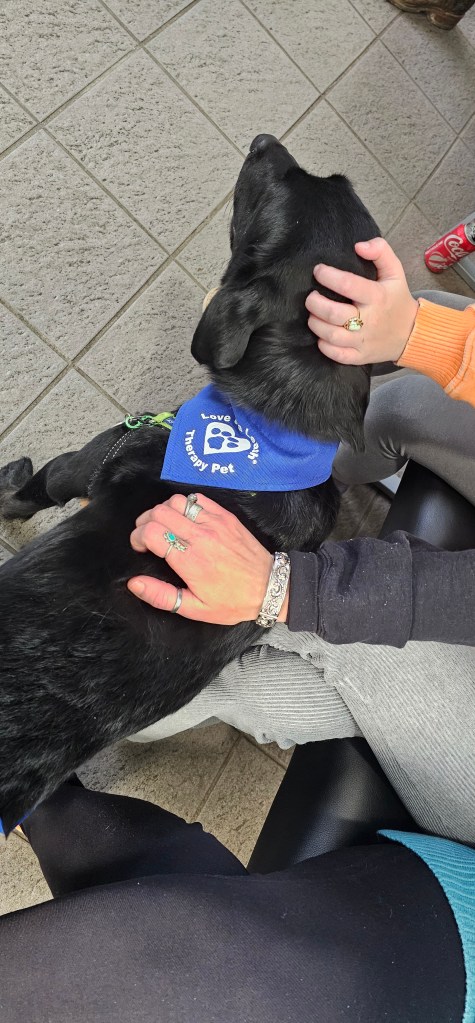
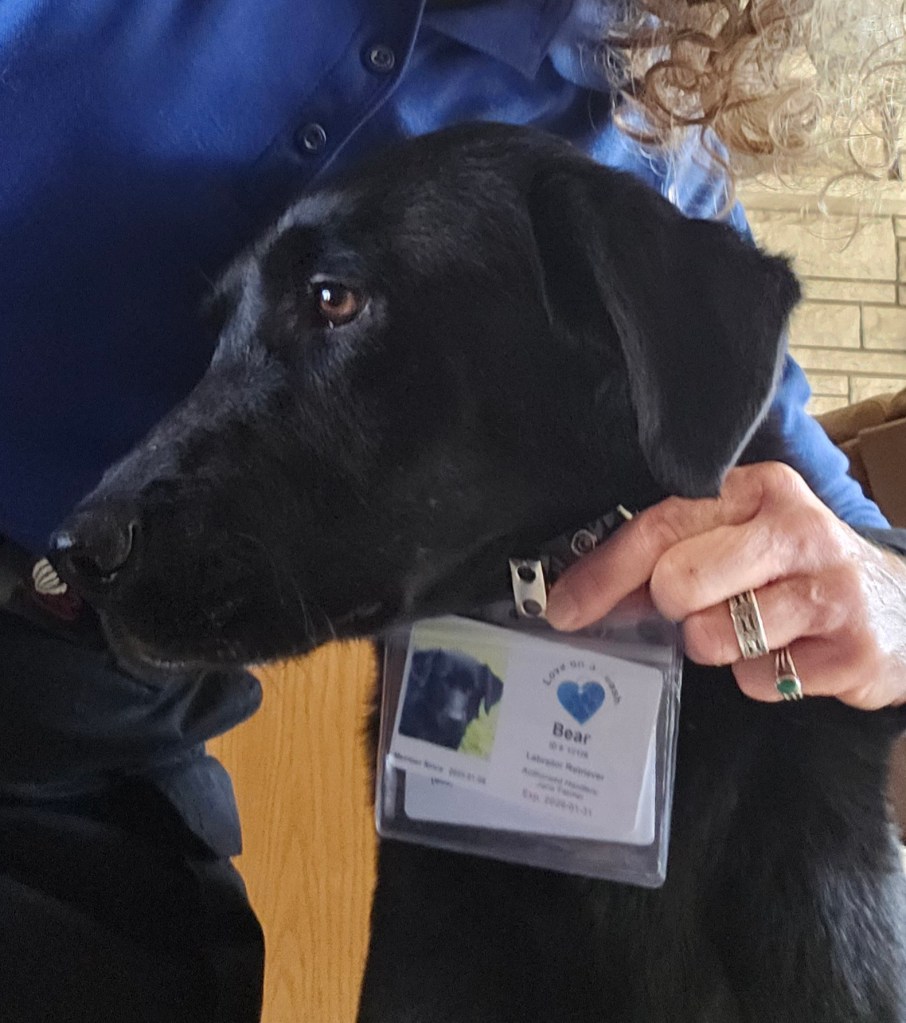
The dog was incorrigible. The dog wouldn’t listen to anything. Recently, that dog’s face was held in the hands of a dying man who whispered, “Man’s best friend.” Bear is now an official therapy dog bringing comfort and smiles to people who are hurting.
He is gentle with babies. He seeks out children to warm their hearts. He is kind to hospice patients. He sparks good memories in the elderly. He was a gentleman when petted by a state senator.
It took work. Three years of intermittent formal training, at home constant consistency, and of course some maturity, have shaped him into a well behaved dog who loves to bring joy to everyone he meets. He leads a rich life because he now fits into the human world.
But he still has plenty of time to be Truman Blue’s goof-ball little brother.
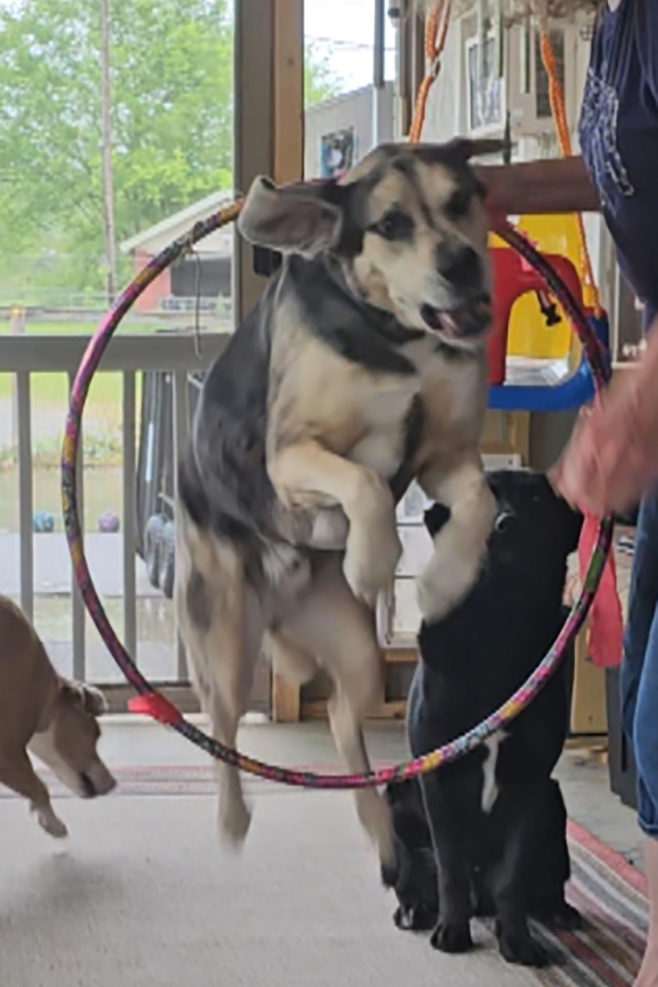
Truman loves doing tricks for two reasons: 1) I enjoy what I’m doing and always use positive reinforcement, 2) because that’s his personality.
It is so much easier to teach other dogs to do ANYTHING if they have someone to first show them how to do it. Following another dog’s example is innate to them, but sometimes they can learn by watching their human teacher.
This video shows an example of dogs following top dog (Truman). It’s chaos because Truman loves doing the hoop. When he sees it, he goes bonkers to do his tricks. He jumps, Teddy follows. Teddy doesn’t know the hoop trick but he does what Truman does.
I’m cracking up, so it takes a minute until I get things under control. Please note, Bear (Lab) has only been doing this trick for a week, and this is Teddy’s (Mountain Cur) first day, and first time with other dogs.
Dog Trick: Three dogs jump through a hoop.
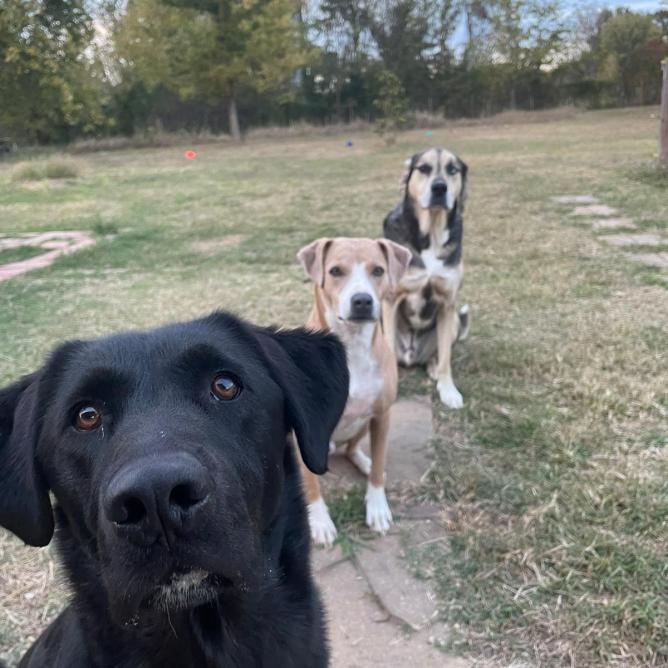
What do you do with your pups when you travel, and you can’t take them with you? Consider this.
We hire a house sitter for many reasons. Primarily, because it is better for our pets. Secondarily, because with five pets it is less expensive. Thirdly, because our house isn’t empty.
You may be surprised by the number of pet sitters in your area. I was. Also, consider a RELIABLE college student you know, who is home on break. There may be a local vet tech who would like to make some money on the side. Do a web search for “pet sitters near me”. You may be surprised.
We hired Ben, and he was great. It was his first time pet/house sitting. He not only notified us when our cat’s eye looked “odd,” he took care of an emergency situation with our hot water heater. We knew what was happening at our house, and we knew our critters were in good hands! Our dogs loved him, and the cats warmed up.
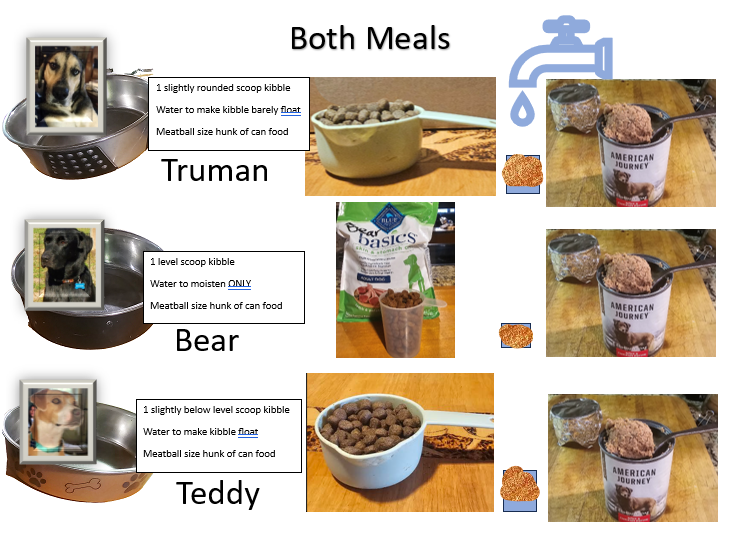
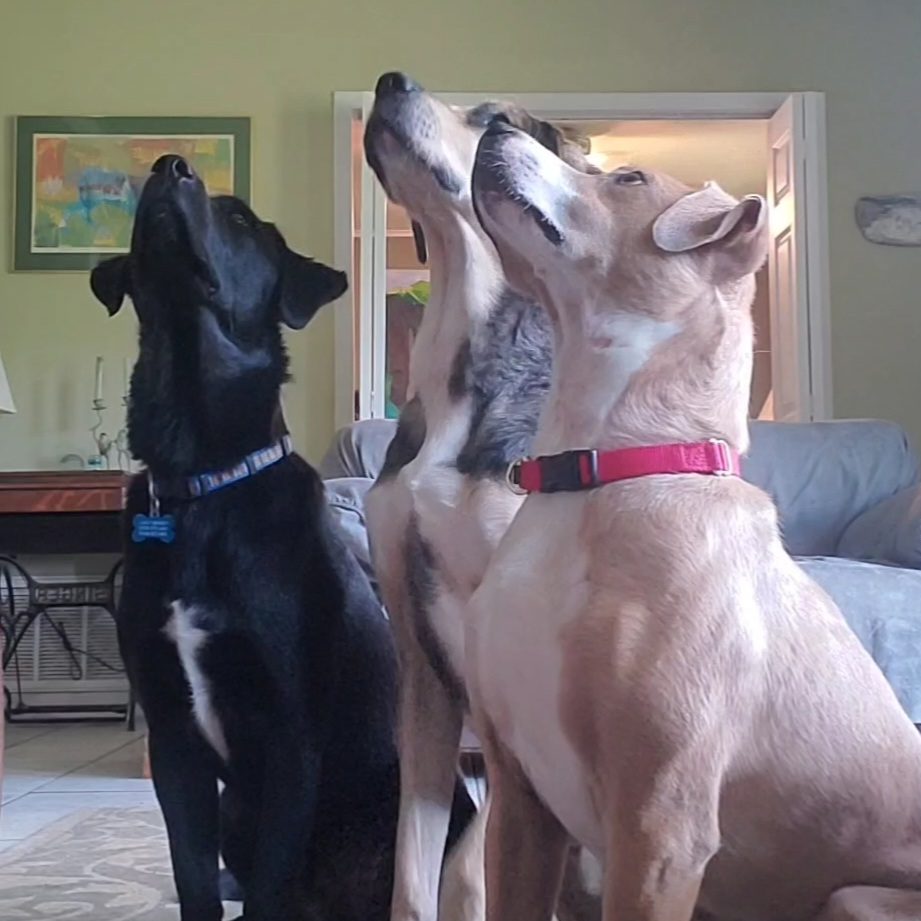
How long did it take you to learn to read? A while, right? And you are a member of the species often claiming to be the most intelligent on the planet, right? How quickly do you expect your dog to learn?
At one time, I was so competitive, and so into what I thought should be happening, I forced everything…everything. When I learned to relax about training, (and other things) my dogs were happier, and I was happier. (Exception: Some pressure may be necessary in some exceptional situations.)
The questions to ask are:
At whose pace do you expect your dog to learn? Yours? Does that really make sense? Dogs that trust their people, are willing to learn. So almost always, you can take it easy. It isn’t rocket science. Although, I admit I have used robot technology to “train” my dogs.
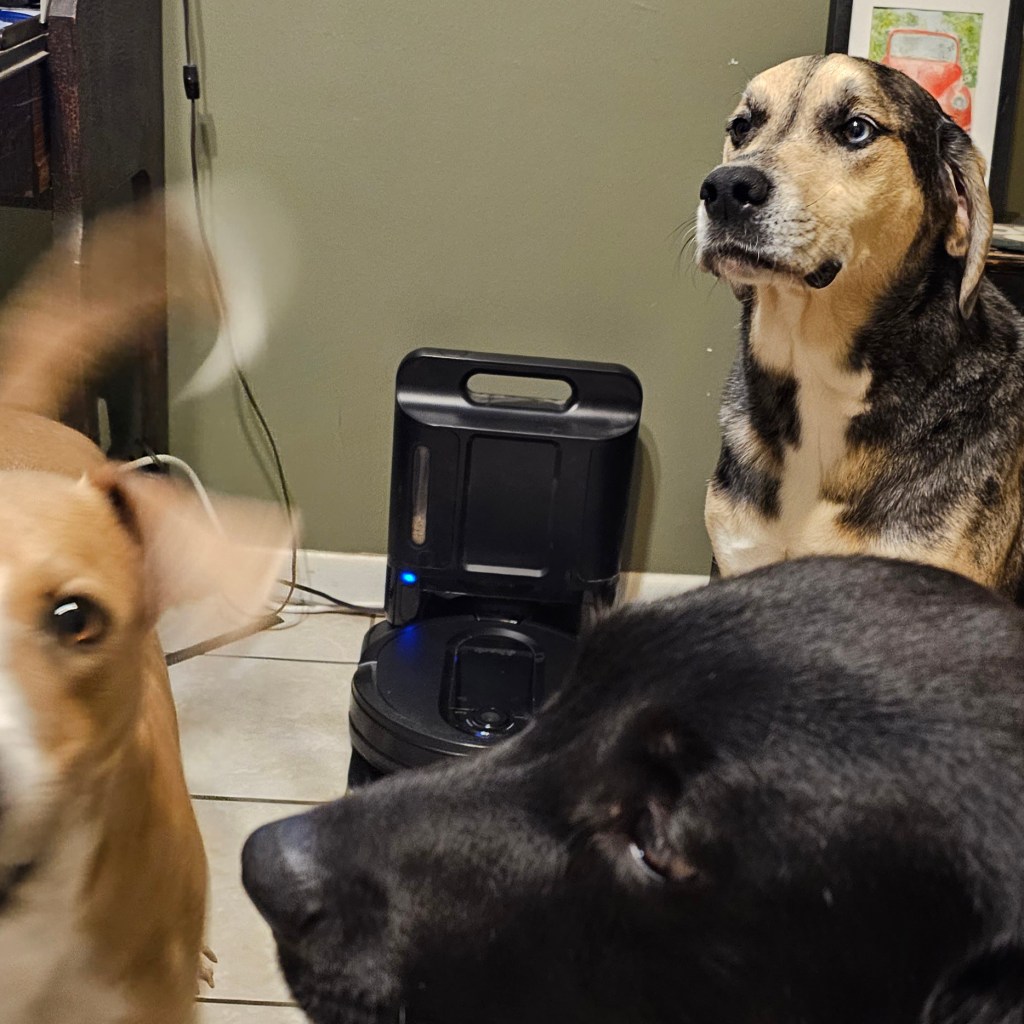
So how did the vacuum train my dogs? Every morning when I left for work, I sent my dogs to the doggie room where they had access to all the comforts of home inside and out. Sometimes they were not 100% willing to do get up and move to the room, but treats were a great lure.
When we purchased a self-emptying robot vac, I scheduled it to turn on five minutes before I had to leave for work. (It vacuums while I’m gone.) As it starts up, it sings a beeping tone, a gentle alarm telling me to gather my keys, send the dogs to the doggie room, and head out the door. After about a year, when the dogs heard the start-up beeping, they got up and headed to their favorite spots in the doggie room. I don’t have to say a word.
It was total unpressured, willing compliance on the part of my dogs. It was routine consistency with a purpose. It took a while, but what’s the hurry?
How long did it take you to learn to read a book?

Most of the time, Teddy was happy, funny and playful. His base breed is terrier, so we expected playful with a dash of temper. A few months after adopting him, the temper, shall we say, was turning to aggression. There was a change in his attitude. Teddy’s random angry outbursts were mostly during play.

“Operation Tranquil Teddy” was on. We went for broke and did everything we could to help this funny and loving dog fit peacefully into our family.
Clues to what triggered aggression:
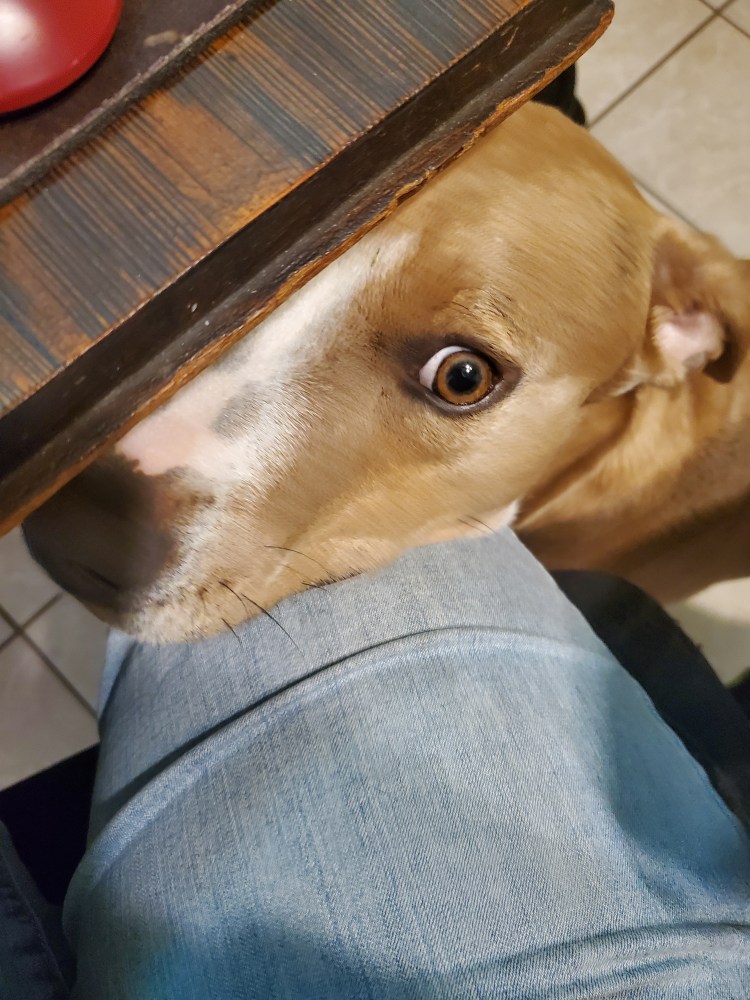
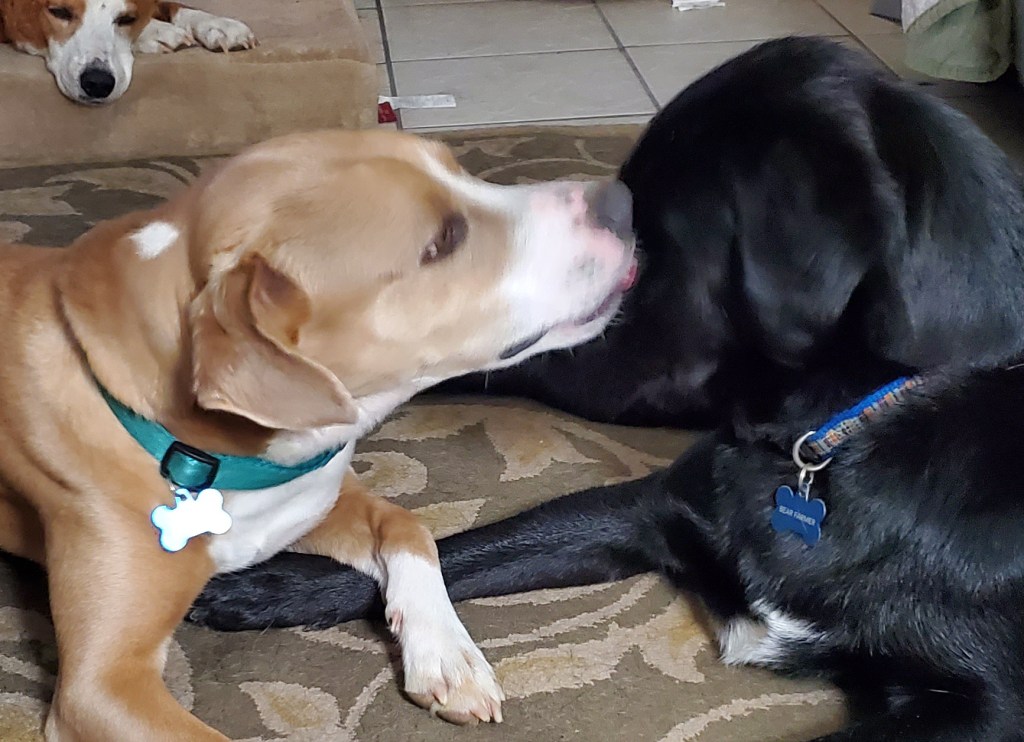
Pieces that didn’t fit Teddy being labeled an aggressive dog:

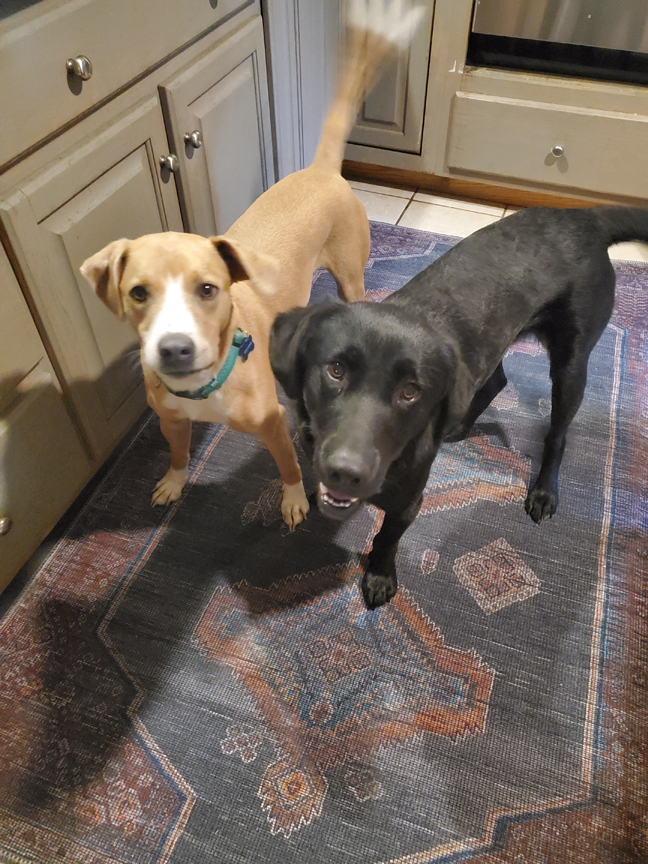
Although being a terrier, he will never be truly tranquil, we haven’t had an aggressive problem since.
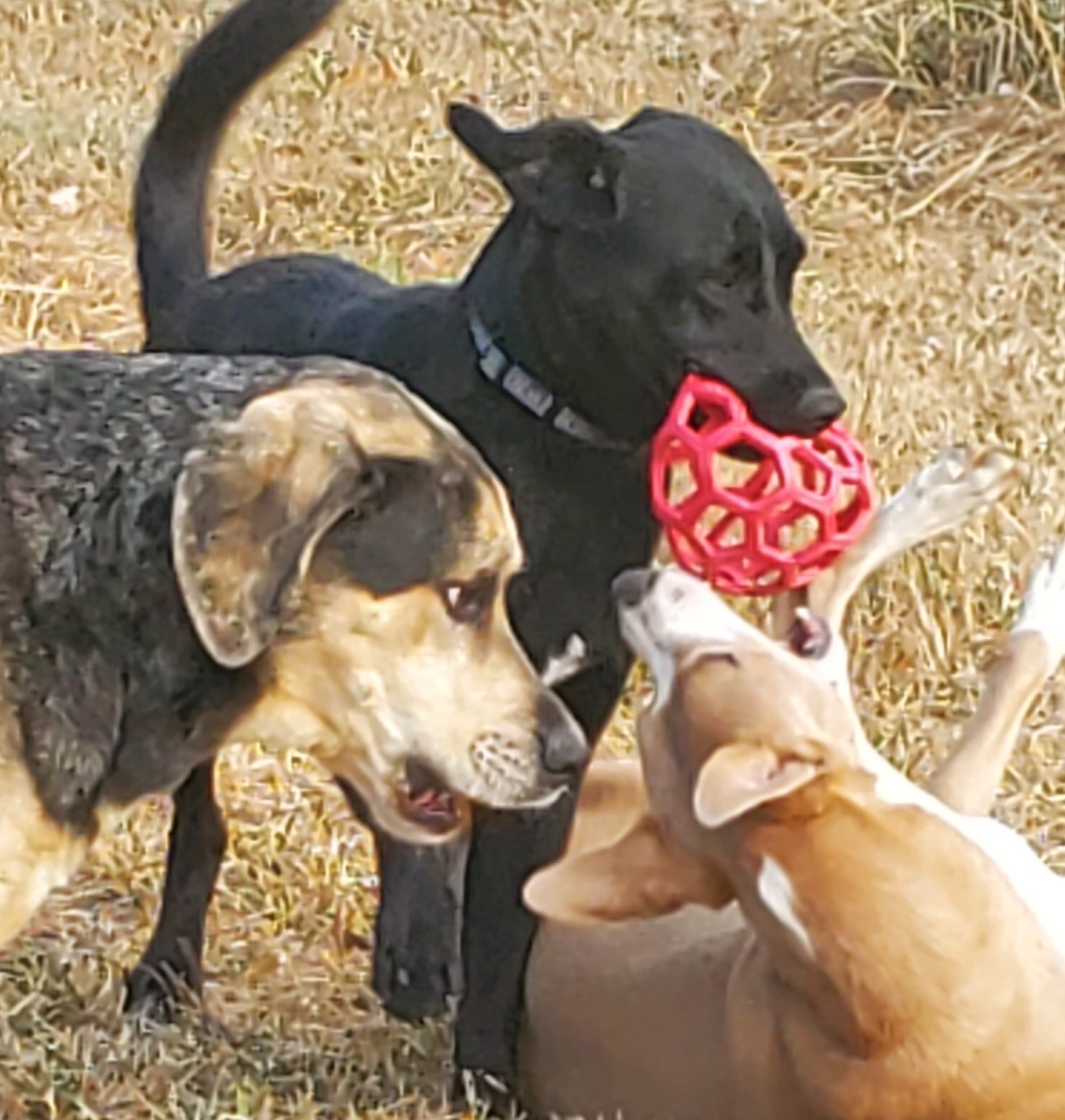
All is not well with the Three Musketeers. Occasionally there is a drop or two of blood from aggravated sparring. Will it resolve, or will it lead to substantial injury? I have to admit, Teddy’s life with us is at risk.
Don’t fear, the other dogs won’t kill him, and we won’t put him down. But if he causes too much blood to be shed, he may need to live somewhere else as a solo dog. Out of necessity, our home is a three-dog household. (Long story for another time.)
Eight months ago, we adopted Teddy from a caring, foster-only rescue. He had been dumped. For a year, the rescue attempted to find Teddy a suitable home. He was shifted through five homes, either for temporary “storage” (3) or potential adopters (2). We adopted him and he seemed to be a perfect fit for us.
Teddy and Bear immediately hit it off as best buds. But over time, things changed. Recently Teddy has attacked Bear, with Bear receiving a few minor puncture wounds. It is unnerving to worry about my beloved dogs.
My conclusion is the hierarchy is unstable because Bear is the High-Second during play, and Teddy is High-Second at all other times, and this creates instability.
I am open to hear related experiences or research on how to handle this problem.
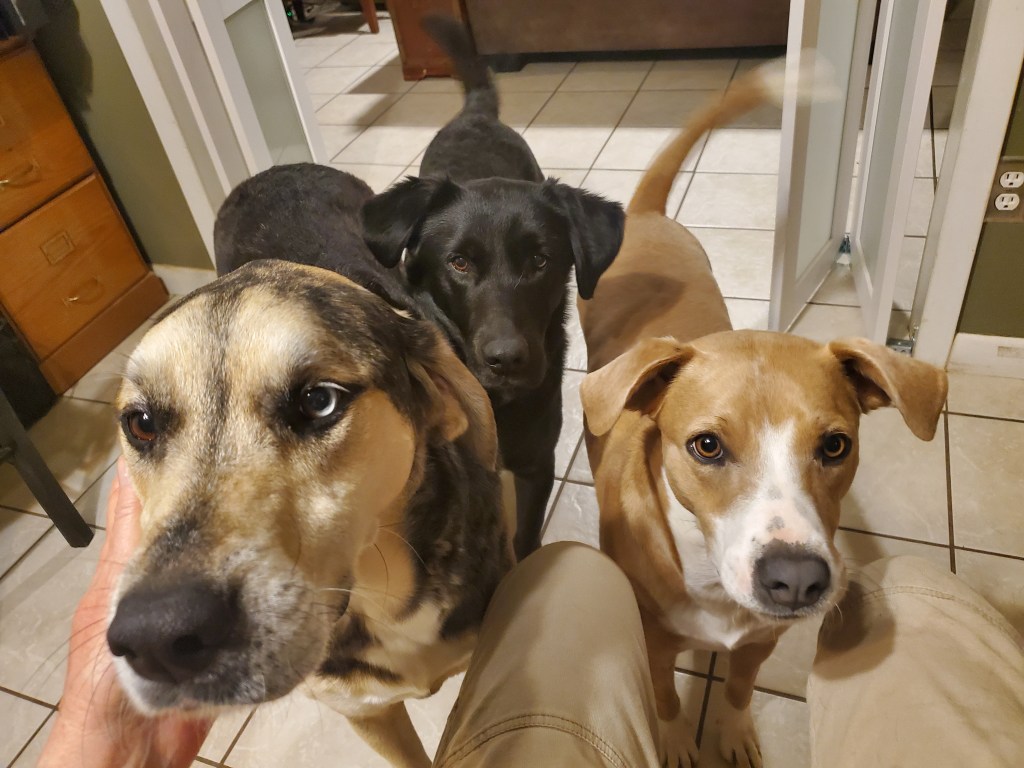
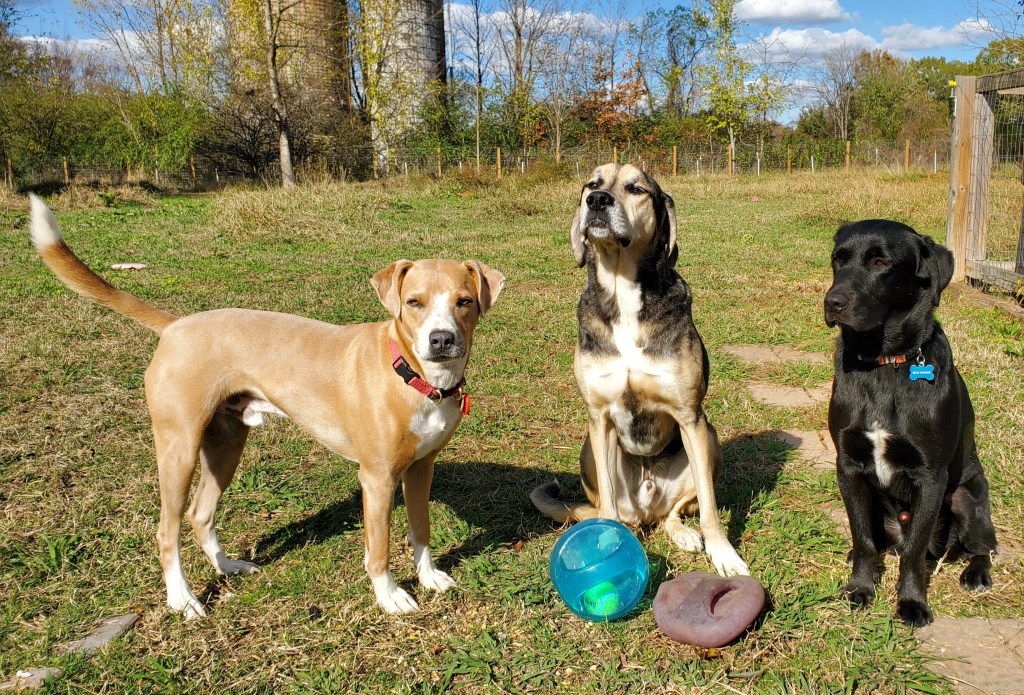
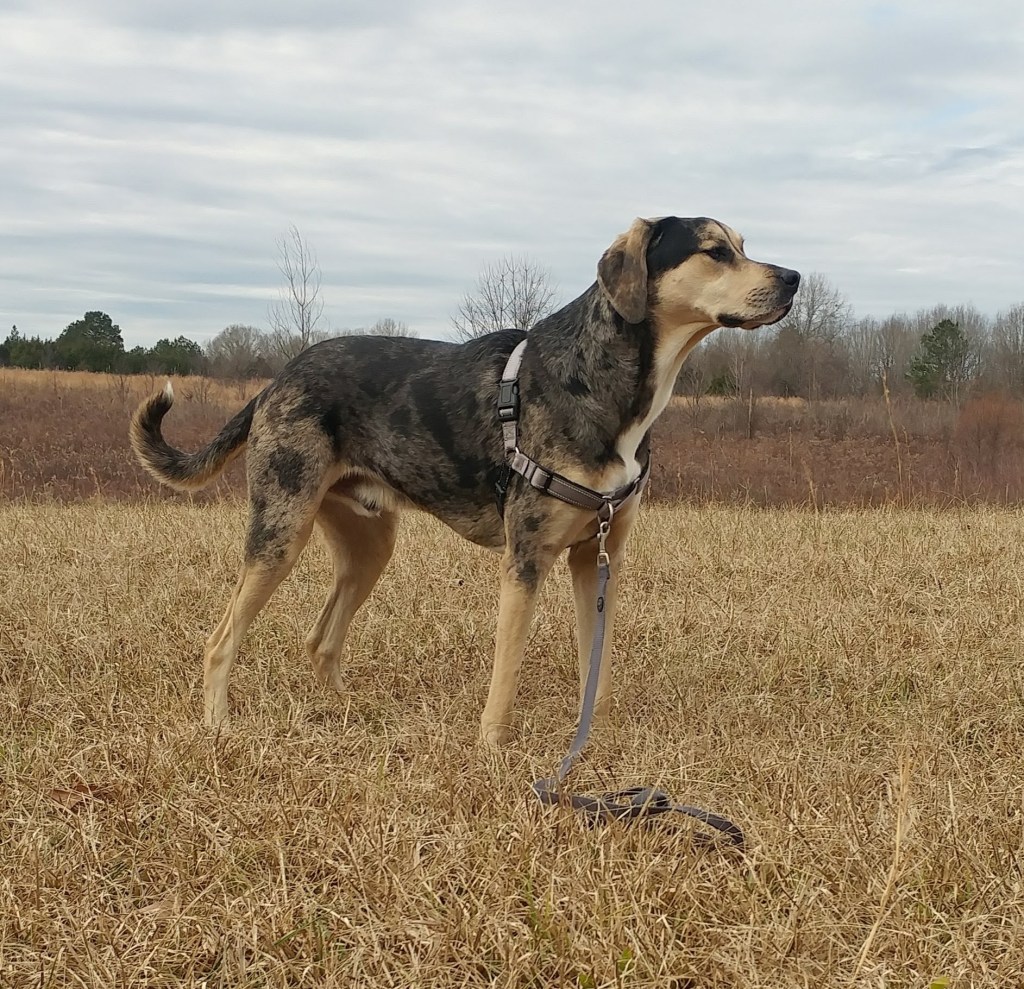
Top Dog -Truman is top dog, no question. He is my long-time favorite, and everyone knows it. He’s a low-key leader, at six-years-old, and 76 pounds, he is bigger and wiser than the others. He rarely involves himself with disputes. I am not sure what triggers his choice to become involved, but I am watching to learn. If he gets involved, he jumps in between and growl ferociously. This stops the Teddy/Bear dispute immediately.
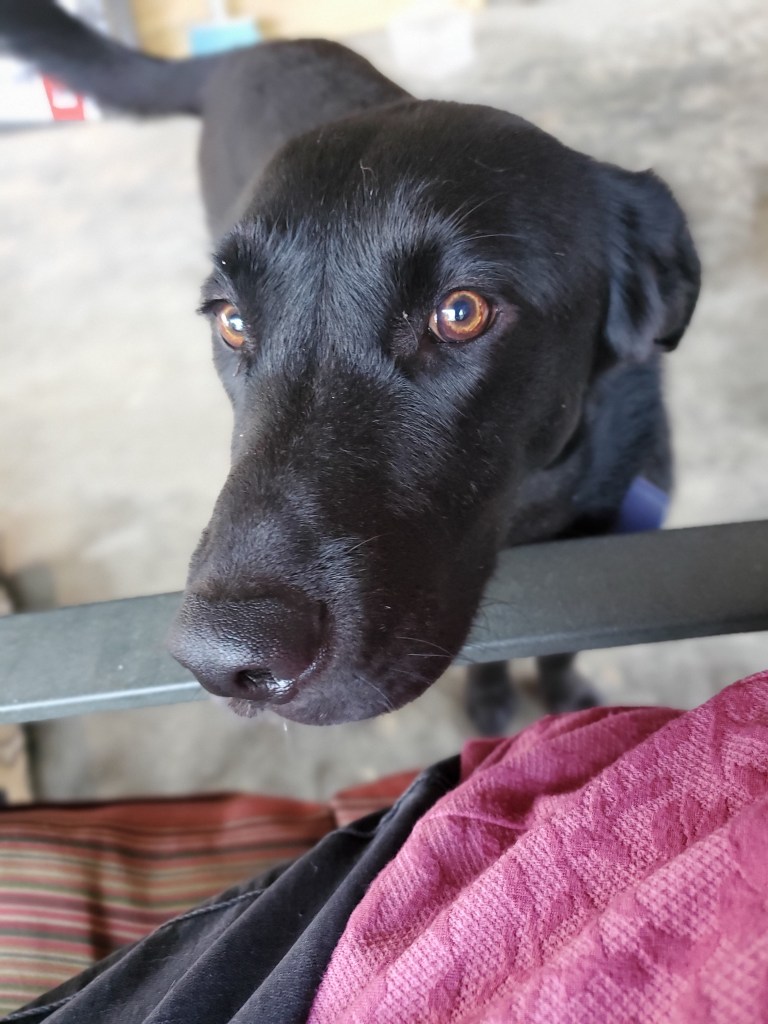
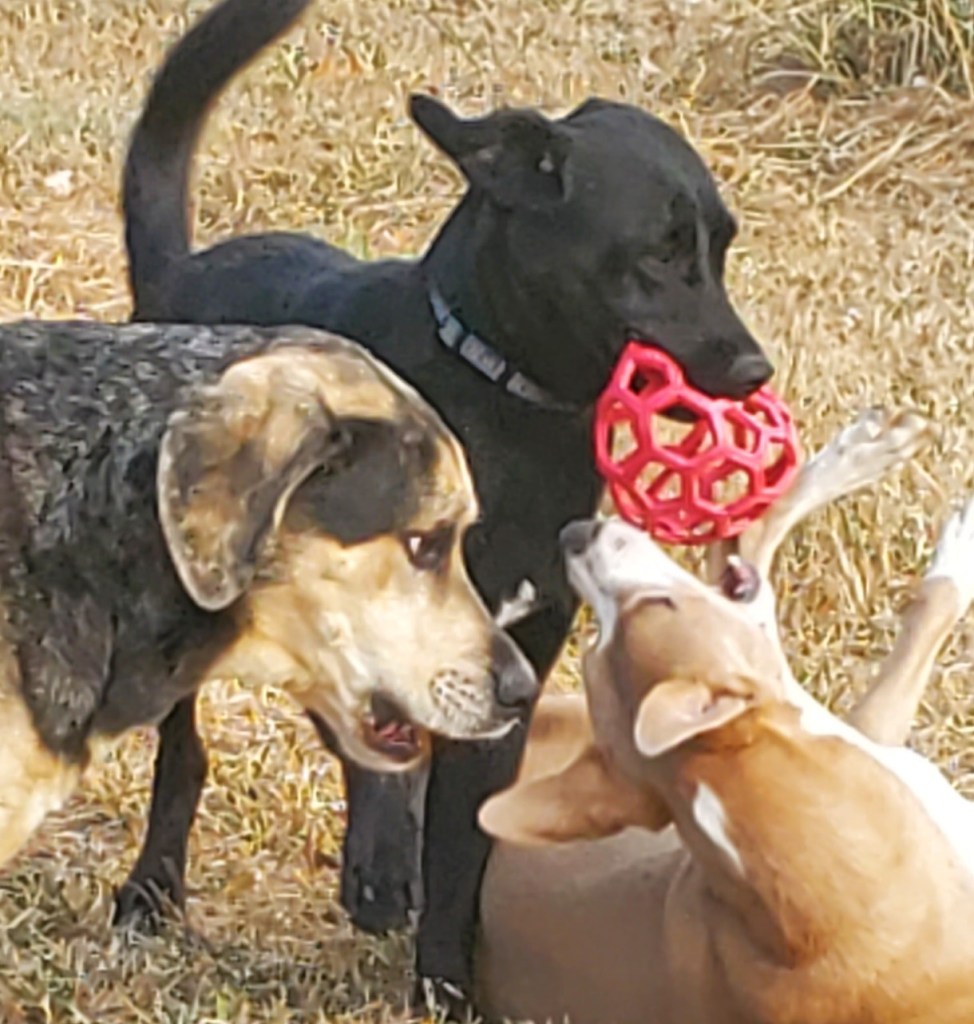
Second Dog Descending – Bear is a happy-go-lucky trickster. Once a stray street dog, we adopted Bear 14 months ago, 6 months before we got Teddy. We still had two very old girls (now over Rainbow Bridge). Two-year-old Bear rarely barks and is always in the mood for play. He is somewhat obsessed with playing with other dogs. He plays hard and rough. When playing, he and Truman frequently “gang up” to chase Teddy (who seems happy to be the “prey”). When Teddy aggressively attacks Bear, he doesn’t fight back (yips & tries to get away)
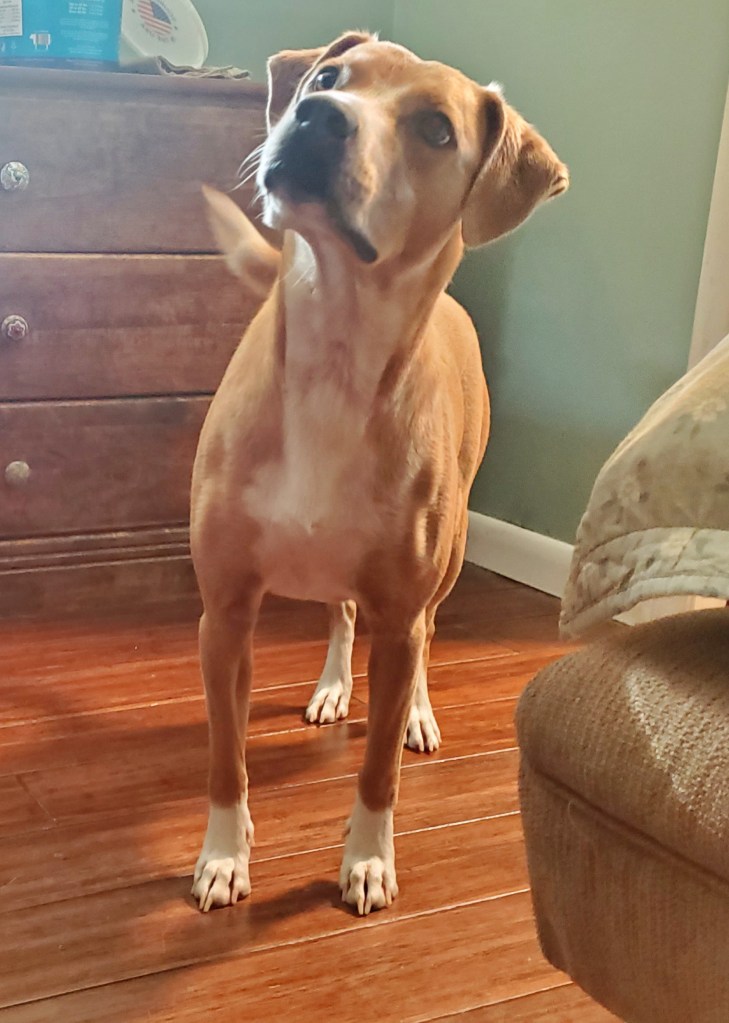
Second Dog Ascending – Teddy is a bit high-strung and intense but very obedient and loves attention from his people. When he is playing, he tolerates rough play with no anger. I have seen the other two dogs roll him hundreds of times and he jumps up with a “happy face” and runs on. When he is done playing, he tells the other two he’s finished, and they respect that.
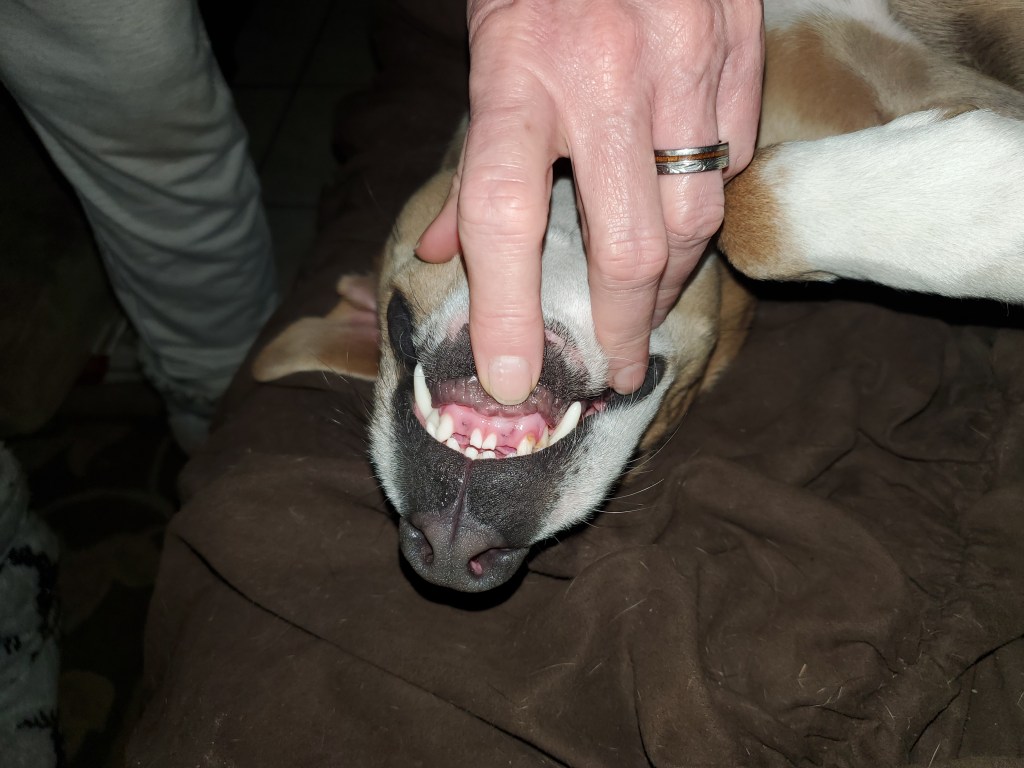
I have only twice seen play turn to fight with Teddy and Bear, and that was during relatively mild play. Notably, Truman wasn’t playing with them at those times. I wonder if it had something to do with Teddy’s injured tooth (soon to be repaired).
Then there are the fights that don’t seem to have a “reason.” They have become more frequent but are usually of short duration. We don’t interfere unless it carries on for more than a few seconds. I cannot determine the triggers. If we stop the fight, Teddy becomes very submissive to us.
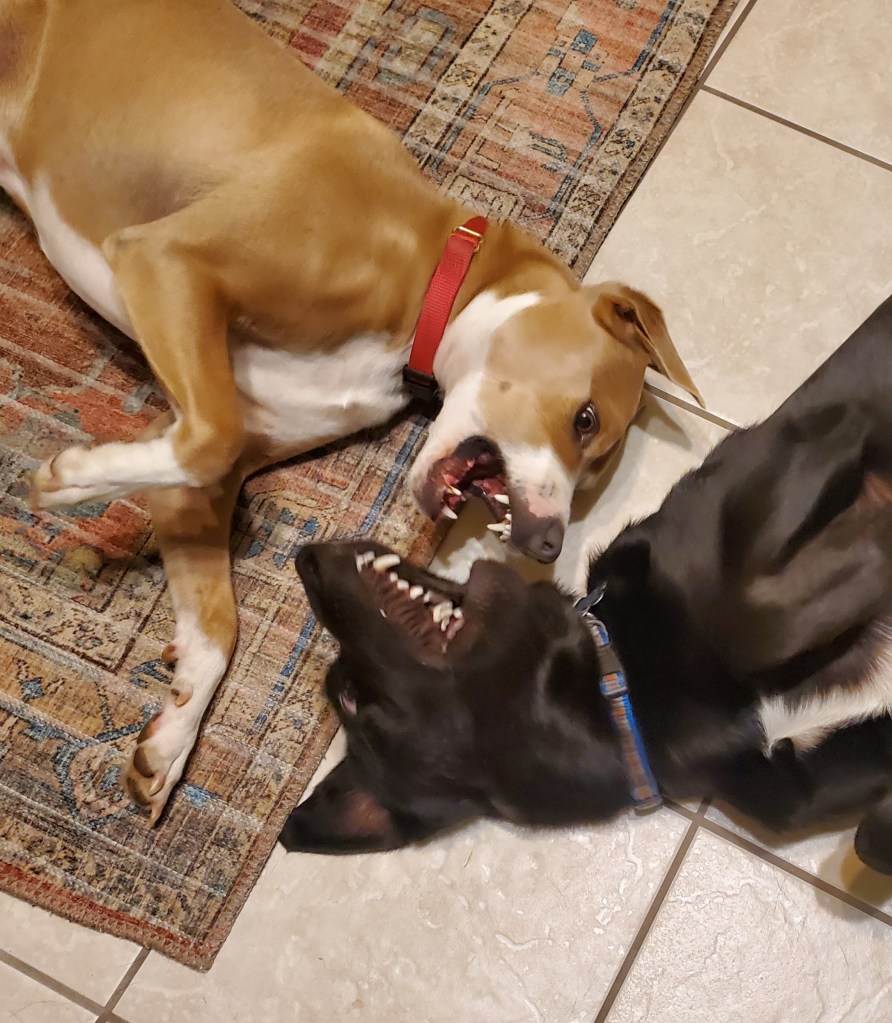
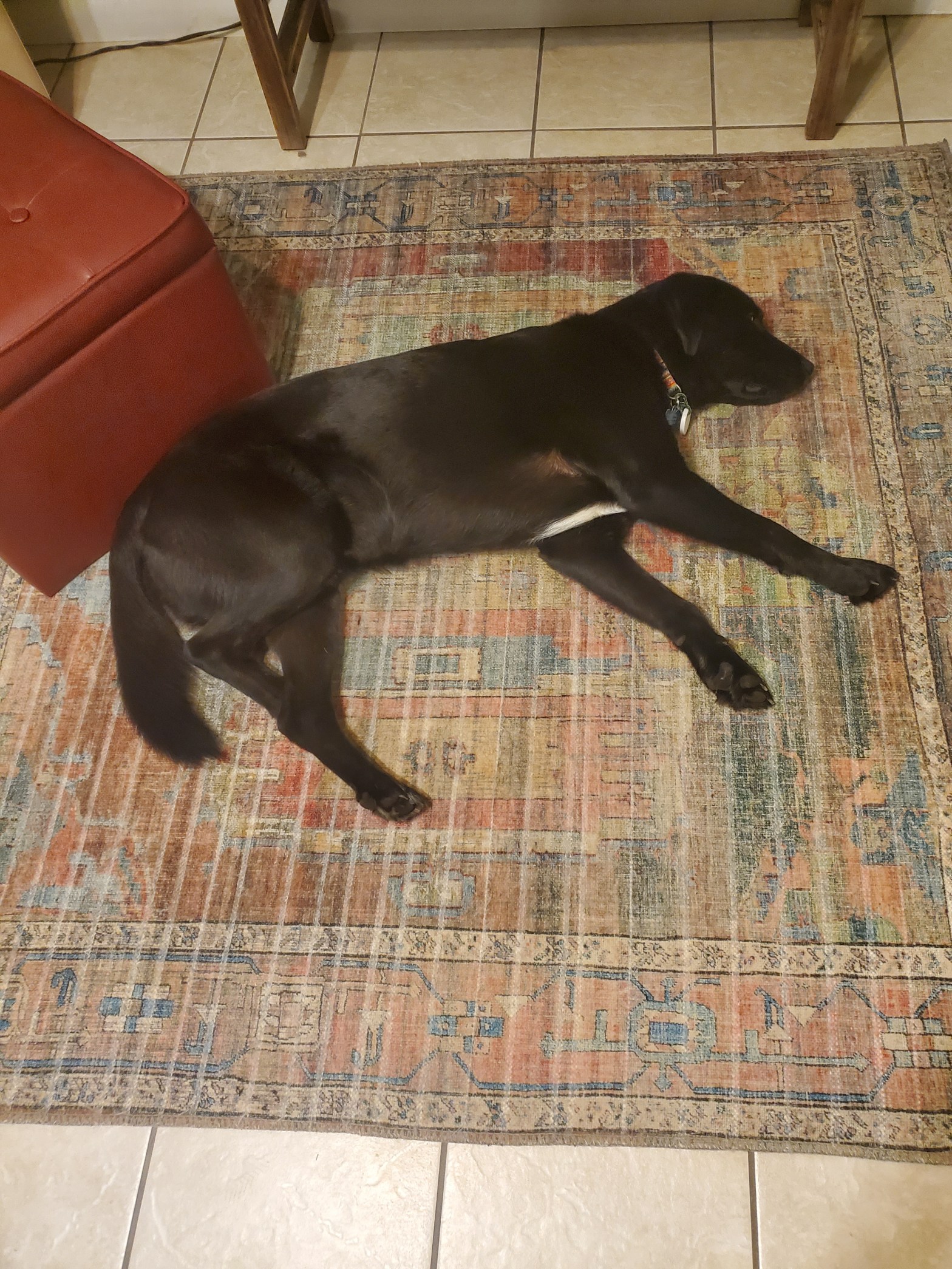
Bear was the most difficult rescue dog I ever adopted. A year ago, his nervous fearful energy had him sailing over fences, dodging through holes, and running in the opposite direction when called.
The first month following our adoption of Bear, (November/December 2021) was spent spending rebuilding, adding height to and securing fence so Bear could run but couldn’t escape onto a busy highway. Escape was his first go-to when scared, and he was frequently afraid. A sound as small as a clicking pen would send him out of a room.
His second go-to was uncontrolled play. Every fiber of his body engaged raucously. It was impossible to get his attention, even when he was on a leash.
Food was also an issue. Having been a starving stray, he would eat anything. Cardboard, wood, dirt. If I dropped a napkin, he would snatch it and eat it. He ate a few rats, supplied by my cats.
The week before our first anniversary of adoption, I noticed a change in Bear that worried me. He laid around the house. He didn’t try to grab dropped napkins. His eyes no longer followed every move we made. His demeanor was a hundred notches below what it had been a year ago.
My husband echoed my thoughts when he asked, “Is there something wrong with Bear?”
The thing is, while playing in the pasture, he still ran, leaped, rolled and hunted with more exuberance than his two friends. Bear had learned to chill in the house. He had learned that his 3-acre home was safe. The dog who once quickly snatched up a dropped napkin and ate it, is now the slowest eater of my pack. He savors his food.
Today, Bear reclined at my feet as I sat on the sofa watching TV and eating lunch. When I was done eating, I took my dishes to the kitchen then returned to the sofa. I hadn’t noticed that I had dropped my napkin. Bear did. He picked it up and put it in my lap.
So, what is wrong with Bear? Absolutely nothing.
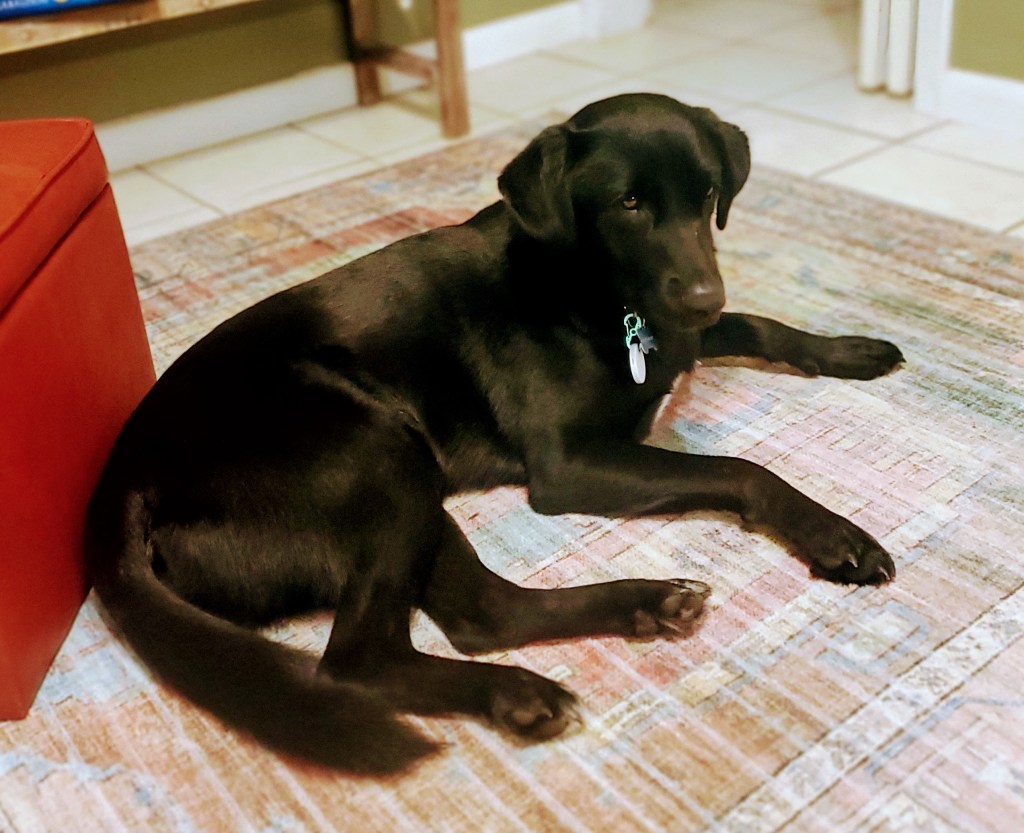
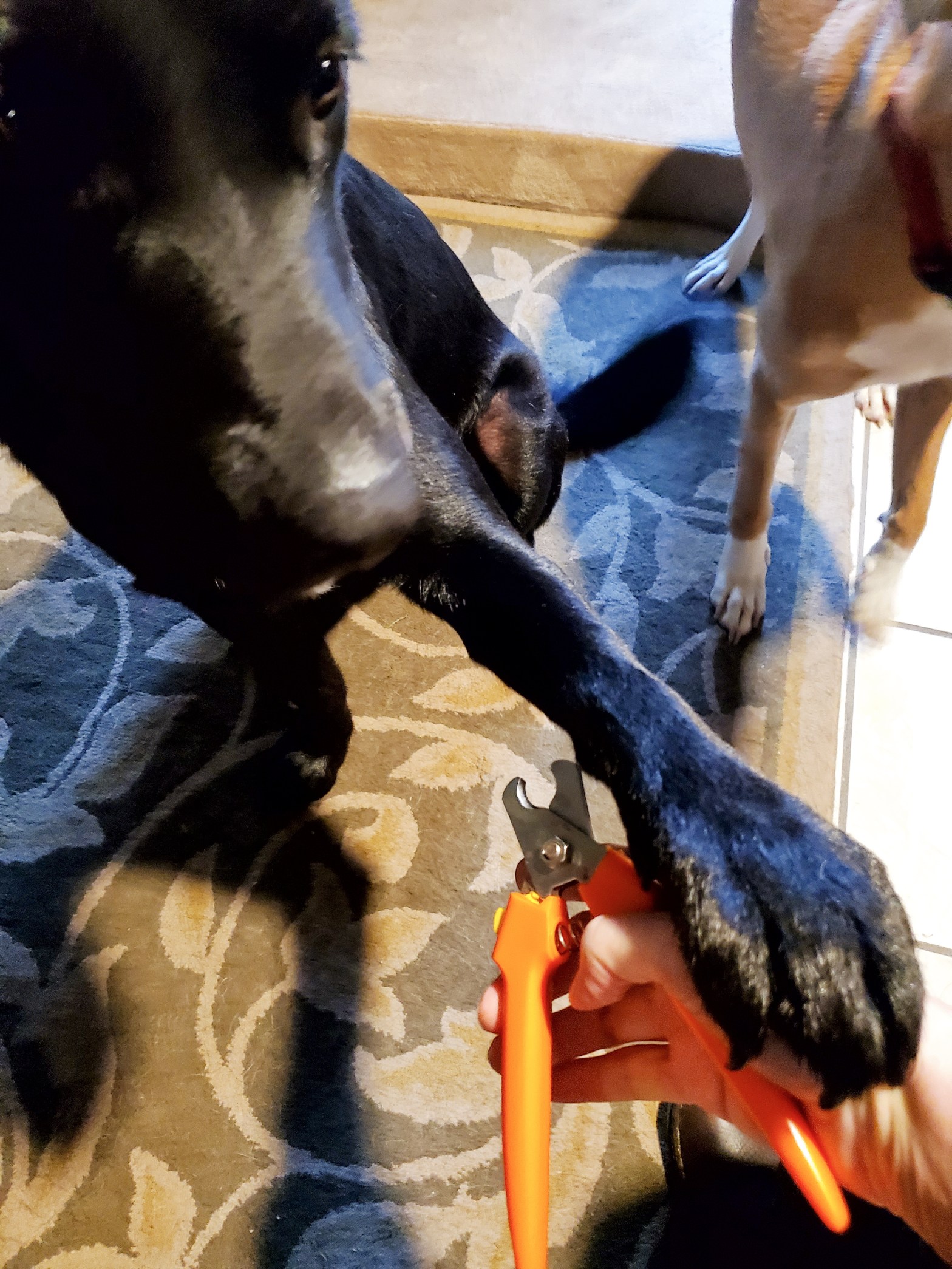
It was my proudest moment of being a dog mom/handler/owner, whatever you want to call it. Bear put his paw on my knee. I’ve had dogs go High in Trial, Best of Breed, Champions, and rank in the national top ten in obedience. When Bear put his paw on my knee, I melted. I was clipping Truman’s toenails. I use positive reinforcement to trim nails, one toenail=one treat. Truman enjoys it, and often gives me his paw to do more, after I have finished clipping all his nails.
What about Bear? When we adopted him from the shelter 10 months ago, he was terrified. If you tried to touch his leg, or hold him, he would mock bite, and scream. He ran from the room if he saw the nail clippers. Six months after we adopted Bear, I dropped off a donation at the shelter, and one of the workers said she remembered Bear. “He had problems,” she said. He did. He was depressed and terrified. His way of dealing with fear was to fight and run away.
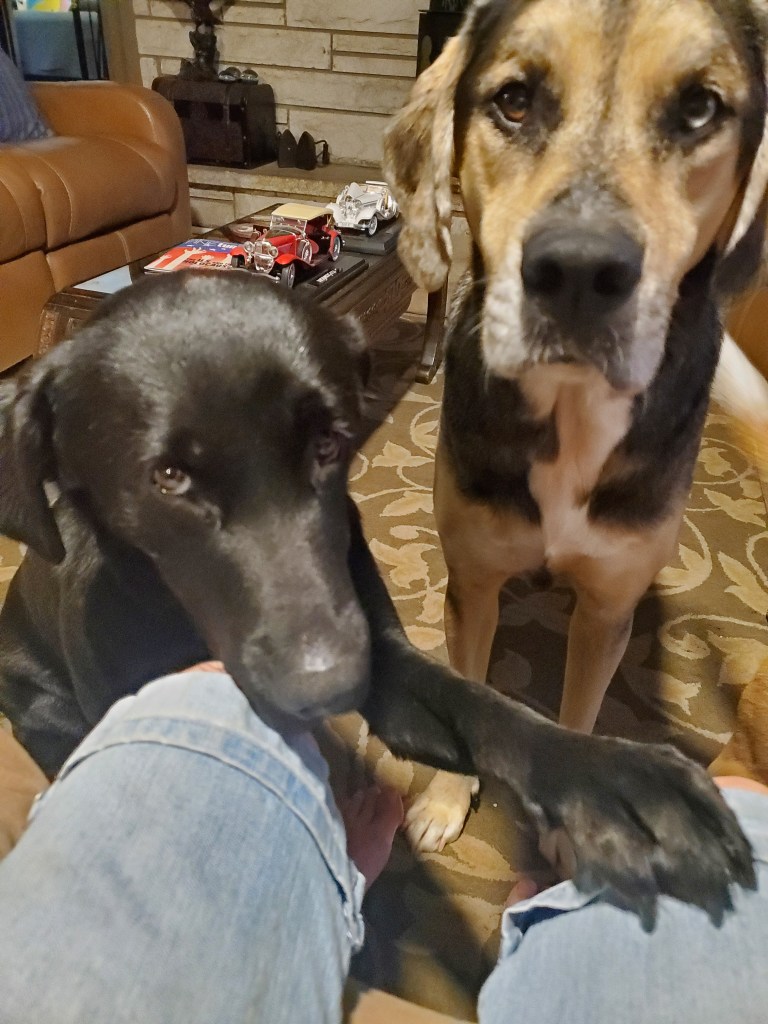
So yesterday, when I was doing Truman’s nails, and Bear came over and put his paw on my knee, and willingly let me clip his dewclaws, I almost cried. It was the most sincere display of trust I have ever experienced with an animal. Bear was flat out saying, in spite of having people hurt him, reject him, throw things at him, hit him, confine him, he trusted me. Me. I was honored.
I published Stalled, the third book in the Truman Blue, Cozy Mystery Series. Publishing is always mixed blessing. This book is a success for a fledgling Cozy writer. I am well into the next book, Staked Out.

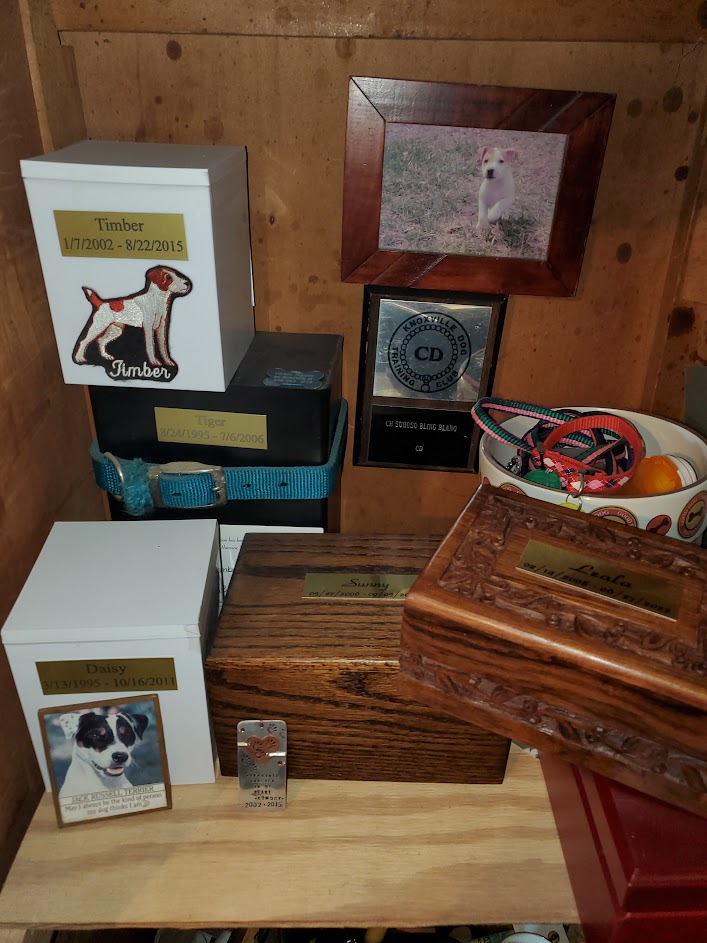
The sorrow was that I unhooked a virtual leash for Leala trot over the rainbow bridge. She was 14 years old. Leala was my first therapy dog. We started together in 2009. She was a stray, terrified of people, but gave them a second chance. She ended up as a premiere therapy dog. She is now in the “memory kennel” with the rest of her buddies.

 Truman Blue Mysteries